
How each new post started lifting every old post in AI search
We thought each new article would compete with the last one. Instead, every sibling we published widened the graph. We built clusters on purpose: GEO audits, AEO metrics, SEO overlap, AI marketing definitions, zero-click measurement, all cross-linked and published using Zelitho. By the export window, 44 unique pages had been cited in AI answers, with up to 17 different URLs referenced on a single day. The breakout checklist was the wedge. The network was the compounding layer.
total
in one day
clusters
Jan peak → May peak
Source: Bing Webmaster Tools AI Performance Pages + Timeline exports (Jun 2026). Citations are visible source references in Microsoft Copilot, Bing AI summaries, and select partner experiences. Methodology and definitions.
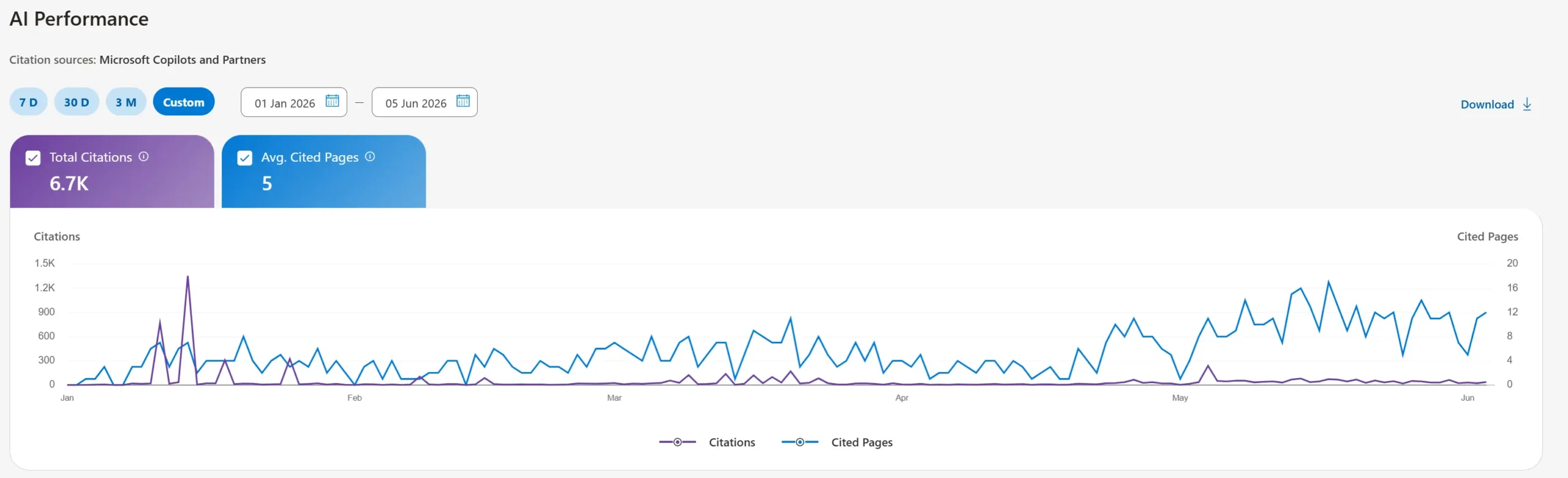
A network on paper. A center of gravity in practice.
Celebrate 44 cited pages and 17 URLs in one day, but be honest: the top 4 URLs still account for ~78% of page-level citations (4,653 of 5,969). The network is real, but it has a gravitational core: GEO audit checklist, Complete GEO guide, AEO metrics, and GEO vs SEO vs AEO. That is compounding with a wedge, not flat distribution. See Google ignored it. AI quoted it 3,258 times. for the wedge, One page dominated AI answers. Then seventeen showed up the same day. for the breadth arc, and AI did not cite one lucky page. It cited us 88 different ways. for the query layer behind both.
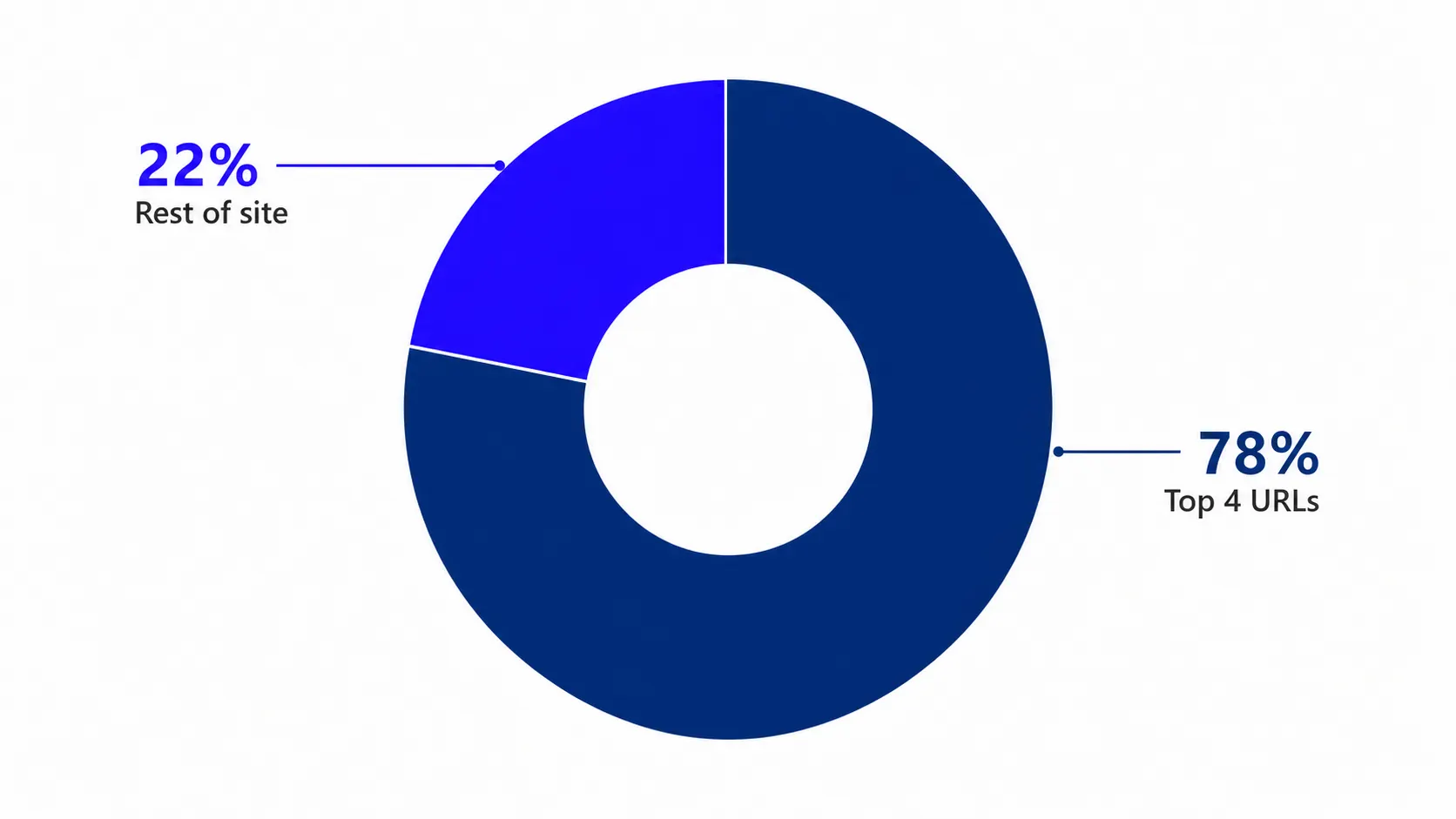
One post opens the door. Clusters keep it open.
Google ignored it. AI quoted it 3,258 times. proved one checklist can carry disproportionate citations. One page dominated AI answers. Then seventeen showed up the same day. proved daily breadth grew: max 8 pages cited in one day (January) to 17 (May 17). AI did not cite one lucky page. It cited us 88 different ways. proved 88 grounding query clusters pull from across the library. This page connects the dots: 5 topic clusters, cross-linked siblings, 44 cited URLs total. Compounding in AI search looks like cluster architecture, internal links, and intent coverage, not more random posts.
“We stopped publishing standalone articles and started publishing nodes in a graph.”
Zelitho content teamFive clusters, one compounding library
GEO audit and readiness (largest cluster)
The wedge cluster. The GEO readiness checklist wins retrieval; sibling guides deepen audit, implement, and measure flow. Cross-links from checklist to guides mirror the playbook in our breakout case study. Grounding queries for “GEO site audit AI search optimization” (1,259 refs) map to multiple URLs in this cluster.
| Representative URL | Citations |
|---|---|
| GEO readiness checklist | 3,258 |
| Complete GEO guide | 592 |
| GEO content blueprint | 60 |
| Technical AEO guide | 44 |
AEO metrics and answer engines
“How do we measure this?” content pairs with GEO audit outputs. The AEO success metrics post earned 463 citations. The answer engine optimization guide added 72. Both link back to the checklist and forward to comparison posts.
| Representative URL | Citations |
|---|---|
| AEO success metrics | 463 |
| Answer engine optimization guide | 72 |
SEO overlap and technical foundations
Comparison and framework content earns citations when structure is scannable: tables, when-to-use sections, clear prioritization. GEO vs SEO vs AEO earned 340 citations. E-E-A-T SEO strategy added 111. This cluster bridges GEO/AEO vocabulary to familiar SEO concepts.
| Representative URL | Citations |
|---|---|
| GEO vs SEO vs AEO | 340 |
| E-E-A-T SEO strategy | 111 |
| Entity SEO topic clusters | 15 |
AI marketing definitions (top of funnel)
Definition posts feed broad retrieval questions. Lower per-URL volume, but they widen the graph and link into GEO/AEO clusters. What is AI-powered marketing earned 313 citations. The beginner’s guide to AI-powered SEO added 49.
| Representative URL | Citations |
|---|---|
| What is AI-powered marketing | 313 |
| Beginner’s guide to AI-powered SEO | 49 |
| What is an AI marketing agent | 4 |
Zero-click and measurement strategy
Connects the “citations are not clicks” narrative to the measurement stack. Zero-click search: what to measure earned 93 citations. Zeroclick SEO mastery tactics added 7. Smaller cluster, but it closes the loop on why GEO reporting matters.
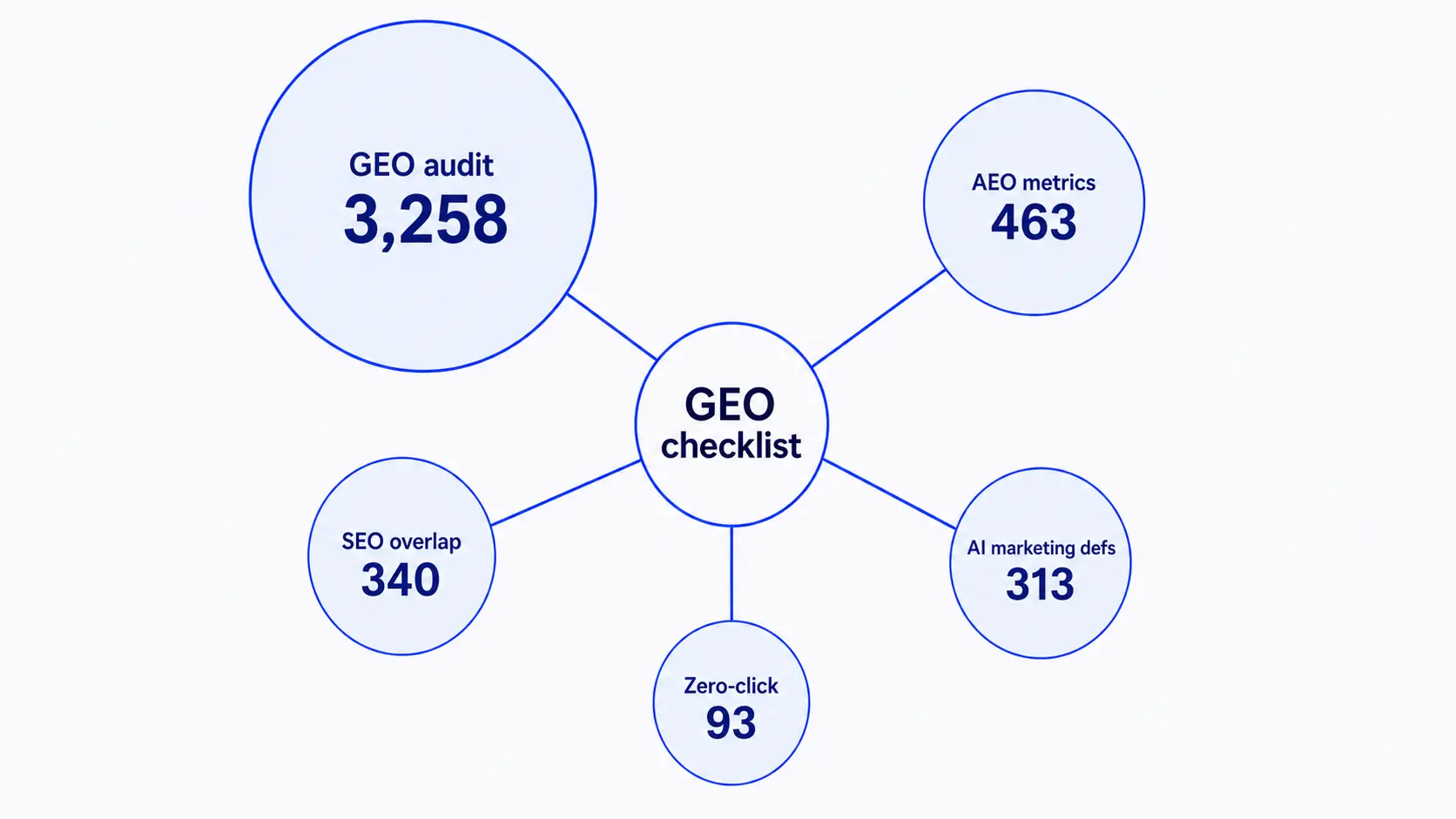
The metric we map content against now
One breakout URL is a wedge. A retrieval graph is the compounding layer. These four signals tell us whether the library is deepening or just adding noise.
Cited pages per day
Track max and average unique URLs cited daily. January max: 8. May max: 17. May average: 10.3 pages per day. Breadth is the compounding signal.
Cluster siblings, not orphans
Each new post links to 2 to 3 URLs in the same intent cluster. Siblings cross-link from the highest-citation page outward with descriptive anchors, not “click here.”
Query ↔ page mapping
One grounding query can retrieve multiple URLs. One URL serves multiple queries. That is the 88-cluster moat mapped to a 44-page library.
Library depth
44 cited pages across five clusters beats one hero URL every time. Depth across intent bands, not one format winning alone.
“Topical authority in AI search looks like a library that answers the next question, not a blog that chases the last spike.”
Zelitho content teamHow to build a compounding citation network (without 44 posts on day one)
You do not need dozens of posts on launch day. You need one wedge per cluster, then siblings that cross-link and widen daily breadth over months.
Read Google ignored it. AI quoted it 3,258 times. for the breakout checklist story. Read One page dominated AI answers. Then seventeen showed up the same day. for the January-to-May breadth arc.
“Compounding looks like May 17: seventeen URLs, one retrieval graph.”
What changed our publishing rhythmSeven steps to compound citations
Repeatable workflow for teams turning one wedge into a cited library.
- 1Publish one wedge asset per primary cluster (checklist, guide, or comparison). The GEO audit checklist is the template.
- 2Add 2 to 3 sibling posts per cluster within 4 to 6 weeks: measure, compare, define adjacent terms.
- 3Cross-link inside the cluster from the highest-citation URL outward. Use descriptive anchors (“AEO metrics,” not “click here”).
- 4Bridge clusters with one overlap post (e.g., GEO vs SEO vs AEO) that links GEO and SEO siblings.
- 5Export monthly: Pages view for cited URL count; Timeline for max cited pages per day.
- 6Track breadth milestones: first day with 5+ cited pages, then 10+, then 15+. The January-to-May arc is the benchmark.
- 7Re-export grounding queries to see which clusters gain new retrieval phrases.
Source data
All metrics below come from Bing Webmaster Tools AI Performance Pages, Timeline, and Grounding Queries exports dated June 5, 2026. Page-level and timeline totals use different denominators; both are labeled.
| Metric | Value | Source |
|---|---|---|
| Cited pages (unique URLs) | 44 | Pages export |
| Page-level citation total | 5,969 | Pages export |
| Max pages cited in one day | 17 | Timeline export (May 17, 2026) |
| Jan max pages cited/day | 8 | Timeline export (Jan 20, 2026) |
| May max pages cited/day | 17 | Timeline export (May 17, 2026) |
| May avg pages cited/day | 10.3 | Timeline export |
| May total citations (timeline) | 1,537 | Timeline export |
| Topic clusters (editorial) | 5 | GEO, AEO, SEO overlap, AI marketing, zero-click |
| Top wedge URL citations | 3,258 | GEO readiness checklist |
| Top 4 URLs combined | 4,653 | Checklist + GEO guide + AEO metrics + GEO vs SEO vs AEO |
| Top 4 share of page-level total | 78.0% | 4,653 ÷ 5,969 |
| Grounding query clusters | 88 | Grounding Queries export |
| Date range | Jan 1 to Jun 2, 2026 | Export filenames Jun 5, 2026 |
| Cluster | Representative URLs (top 1-2) | Combined citations |
|---|---|---|
| GEO audit and readiness | Checklist + Complete GEO guide | 3,850 |
| AEO metrics and engines | AEO metrics + AEO guide | 535 |
| SEO overlap | GEO vs SEO vs AEO + E-E-A-T | 451 |
| AI marketing definitions | AI-powered marketing definition | 313 |
| Zero-click strategy | Zero-click search post | 93 |
What this case study does not prove
- Cluster cross-links do not guarantee AI will cite sibling pages. Observational data only.
- 44 cited pages does not equal 44 independent ranking wins or future citation guarantees.
- Top 4 URLs still carry ~78% of page-level citations. Compounding did not flatten the curve.
- Timeline and Pages totals may differ (5,969 page-level vs 6,671 time-series). Label denominators in the source table above.
- Scope: Microsoft Copilot, Bing AI summaries, select partners. Not ChatGPT, Perplexity, or Gemini unless separately evidenced.
- May 17 (17 pages) is a peak day, not the daily average (10.3 in May).
Frequently asked questions
What is the compounding effect in AI citations?
When interlinked content clusters grow, more unique pages get cited over time. Zelitho went from a max of 8 pages cited in one day (January) to 17 (May 17), across 44 total cited URLs.
How many topic clusters does Zelitho use?
Five editorial clusters: GEO, AEO, SEO overlap, AI marketing definitions, and zero-click measurement. Each has 2+ cited sibling URLs cross-linked from a wedge post.
Does one page still dominate?
Yes. The GEO audit checklist has 3,258 citations (~55% of page-level total). Compounding added 43 other cited URLs and higher daily breadth. It did not flatten the top URL.
What happened on May 17, 2026?
The timeline export shows 17 unique pages cited that day, the peak in the audit window. That is breadth (many URLs), not necessarily high total citation volume for that single day.
How does this relate to the 88-query moat case study?
AI did not cite one lucky page. It cited us 88 different ways. shows 88 grounding query clusters AI uses to retrieve Zelitho content. This page shows the page library and cluster structure those queries pull from.
Do internal links guarantee AI citations?
No. Bing data is observational. Cross-linking is a publishing practice aligned with cluster depth. Causation cannot be inferred from the dashboard.
How do I start building my own citation network?
Publish one wedge asset per cluster, add 2 to 3 siblings, cross-link from the highest-citation page, and re-export Bing AI Performance monthly to track cited pages per day.
References
Methodology definitions summarized from Microsoft Bing Webmaster Tools AI Performance documentation.
- AI citation and scope. A citation is the total number of times your content was visibly referenced or shown as a source in AI-generated answers during the selected date range. AI Performance reflects activity across Microsoft Copilot, AI-generated summaries in Bing, and select partner AI integrations. It does not measure rankings, authority, performance, or importance.
- Cited pages per day. The count of unique URLs from your site that were visibly cited in AI-generated answers on a given day. Average cited pages is the mean unique URLs cited per day over the selected range.
- Grounding queries. Short grouped phrases representing key terms the AI used when retrieving content that was cited. They are not full user questions or prompts. One grounding query can map to multiple pages; one page can appear under multiple grounding queries.
- Citations vs engagement. A citation indicates that content was visibly referenced in an AI-generated answer. It does not represent traffic, clicks, or user engagement.
- AI vs traditional search metrics. Grounding and citations show how AI systems use your content to generate answers. This differs from traditional search metrics, which measure rankings, clicks, and traffic.
- Data sampling and views. AI Performance data is aggregated and summarized, not a complete log of every citation. Totals may differ across Pages, Grounding Queries, and timeline views. Timeline trends are observational and cannot be attributed to a single cause or event.
- Measuring on your site. In Bing Webmaster Tools, open AI Performance for your verified site. Export page-level citations, grounding queries, and timeline metrics as CSV or Excel. Re-export monthly for trend analysis.
Definitions above are paraphrased for readability. Export filenames dated June 5, 2026.
Source: Microsoft Bing Webmaster Tools. AI Performance in Bing Webmaster Tools
One wedge opens the door. Clusters keep it open.
Start with Google ignored it. AI quoted it 3,258 times., publish cluster siblings on a steady cadence, and export Bing AI Performance monthly to watch cited pages per day grow.