
What Is an AI Marketing Agent? A Clear Explanation of How It Works

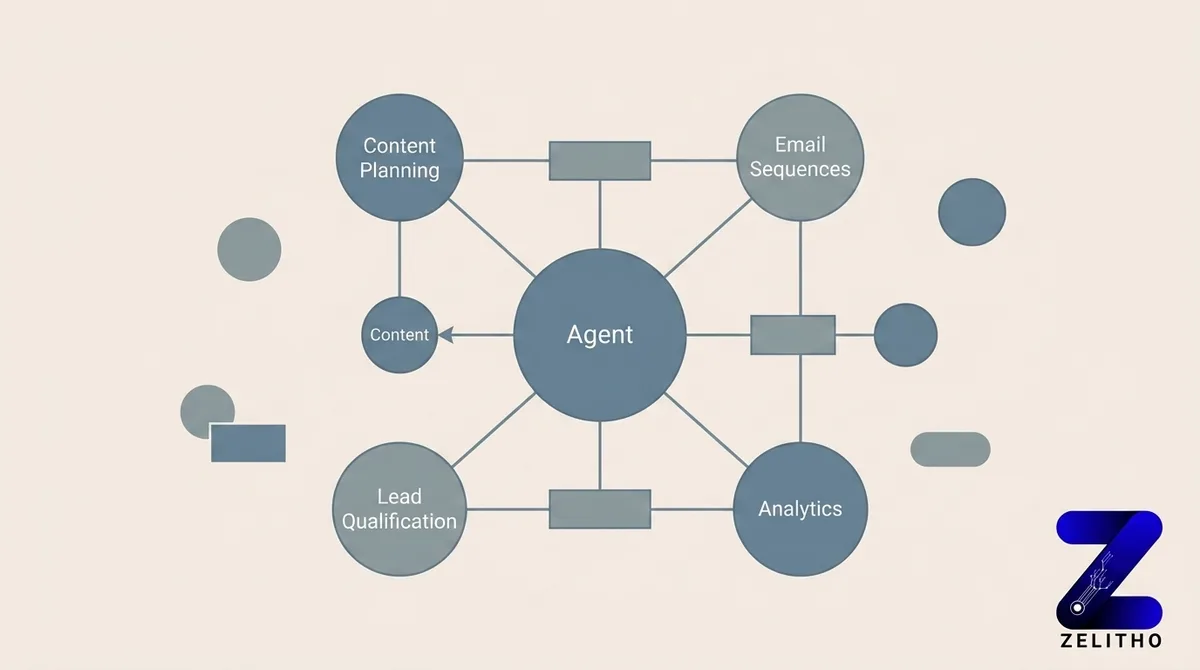
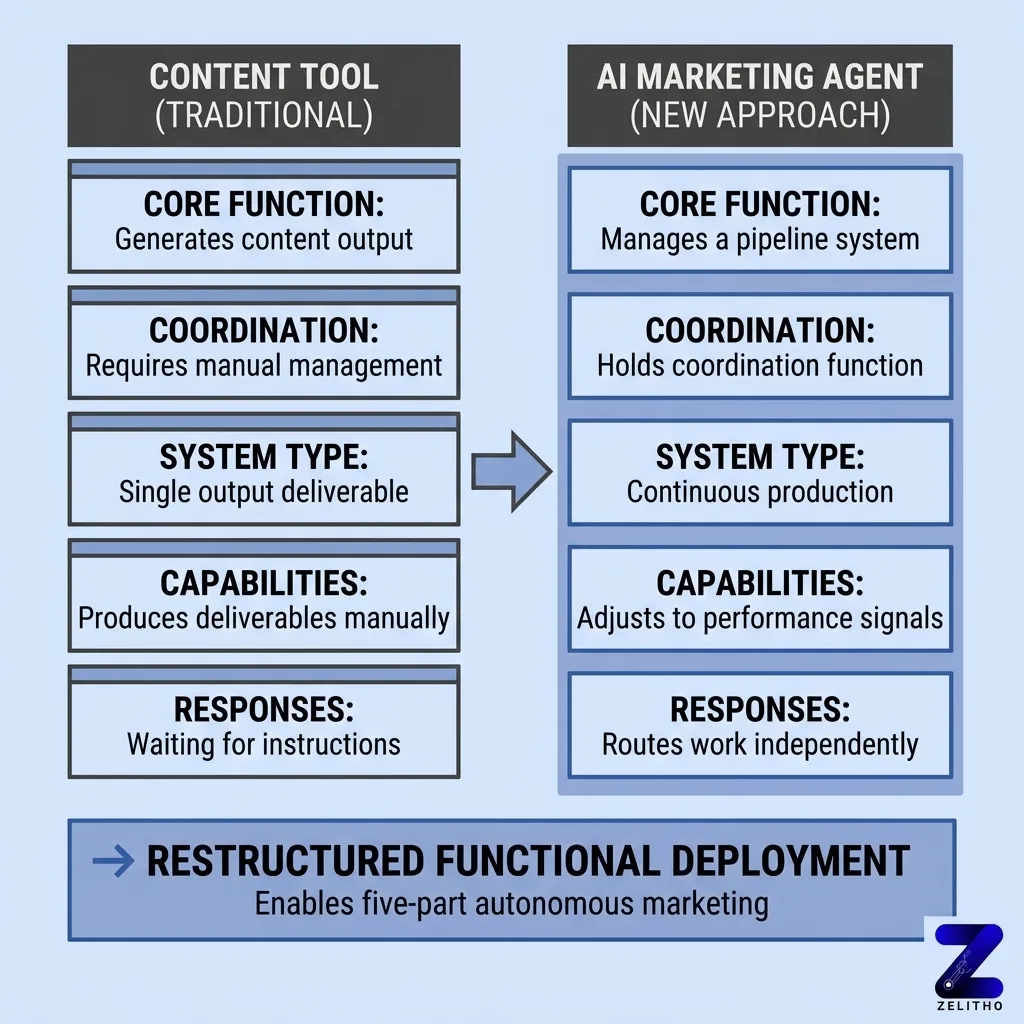
An AI marketing agent is an autonomous software system that perceives market signals, plans multi-step execution paths, and completes complex operational workflows without requiring manual prompt-by-prompt guidance. While traditional marketing automation follows static rules (such as “if user opens email, wait 2 days and send message B”), an AI agent evaluates unstructured performance data, makes goal-oriented decisions, and executes end-to-end tasks like search visibility gap analysis, dense vector content remediation, and direct CMS deployment.
What is the difference between an AI marketing agent and a marketing automation tool?
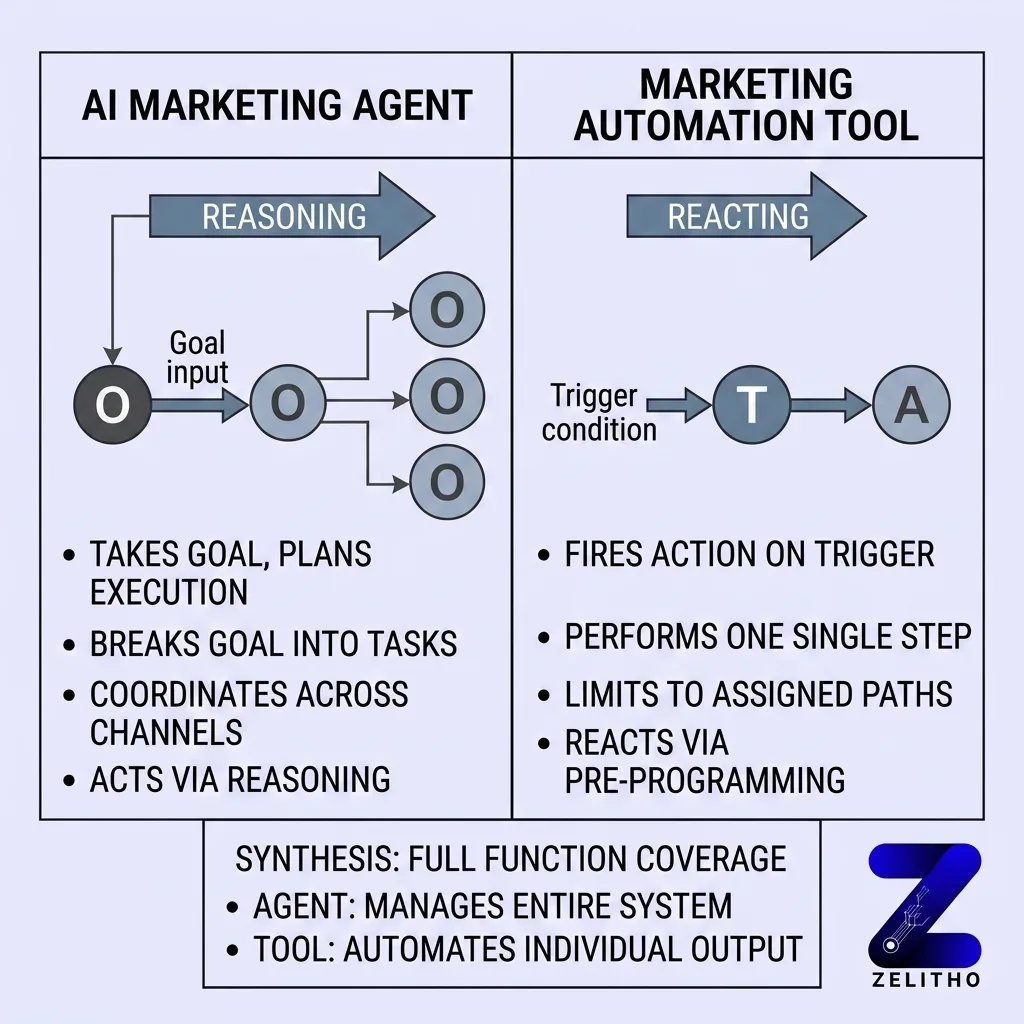
Traditional marketing automation tools are deterministic execution engines. They require a human operator to define every conditional branch, write every copy variation, and configure every API trigger. When an edge case occurs, traditional automation stalls until a person intervenes.
In contrast, an AI marketing agent functions as an autonomous coordinator. It is assigned an objective (such as “identify underperforming blog URLs with zero AI search citations and deploy answer-first content updates”), assesses the live environment, formulates a sequence of actions, and executes those steps across tools and databases. Teams deploying coordinated agent workflows reduce content production cycles by up to 68% while maintaining technical quality [1].
| Dimension | Traditional Marketing Automation (e.g., Zapier, Marketo) | Autonomous AI Marketing Agent (Zelitho Standard) |
|---|---|---|
| Decision Logic | Deterministic: If/Then rules hardcoded by a human. | Probabilistic & Goal-Oriented: Evaluates context and selects optimal tool execution. |
| Adaptability | Breaks on unstructured input or API schema changes. | Interprets unstructured data, handles exceptions, and retries alternate methods. |
| Content Creation | Templates populated with static merge tags. | Researches topics, diagnoses RAG friction, structures tables, and crafts citable copy. |
| Human Oversight | High maintenance: every workflow change requires manual re-engineering. | Supervisory: human reviews key strategy checkpoints and approves final deployment. |
| Output Scope | Isolated tasks (e.g., send SMS, add row to Google Sheets). | End-to-end systems (e.g., audit AI visibility, draft update, validate schema, publish). |
AI Workflow Services for Search Visibility Optimization
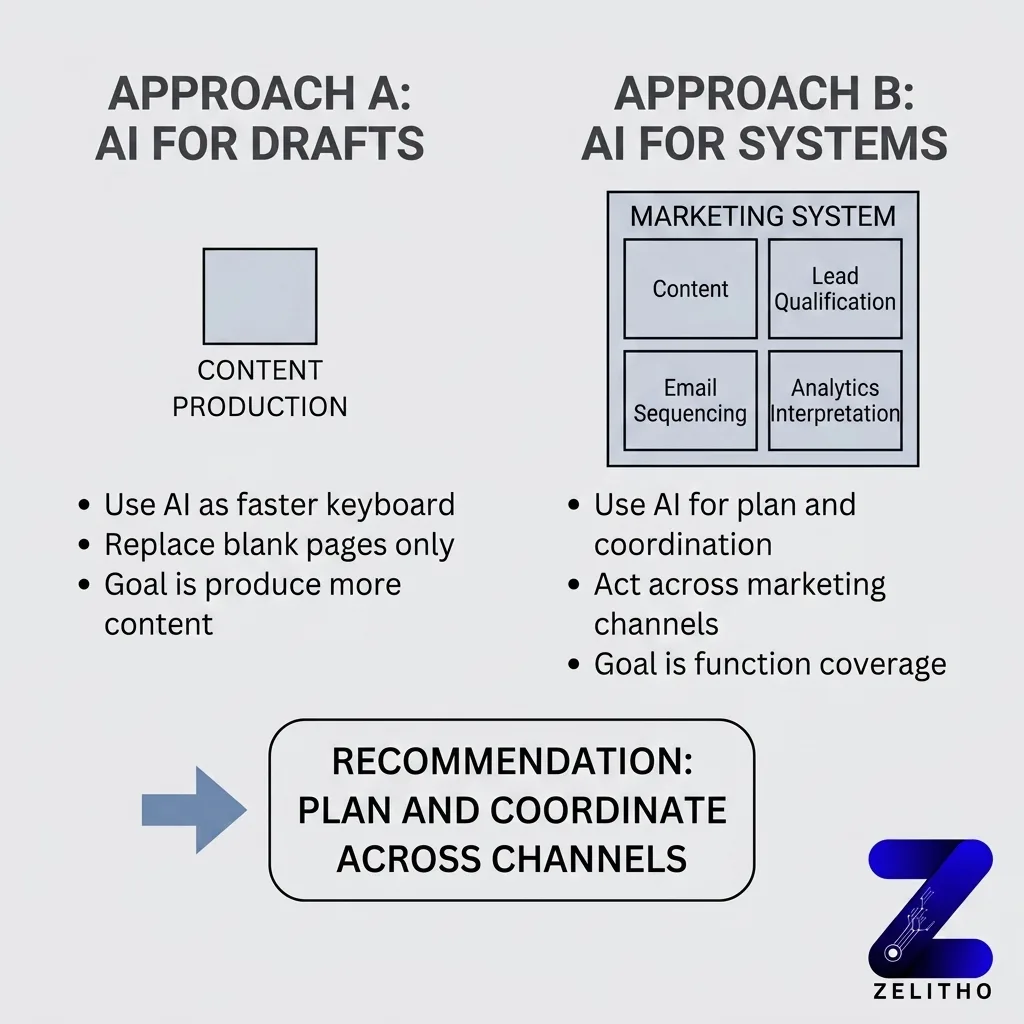
Deploying AI agents for search visibility moves far beyond generic text generation. Specialized AI workflow services coordinate multi-stage pipelines designed specifically to win citations in conversational search engines like Microsoft Copilot, Perplexity, and ChatGPT Search.
An enterprise AI visibility agent coordinates four operational stages:
Stage 1: Autonomous Citation & Grounding Gap Auditing
The agent queries search performance telemetry (such as Bing Webmaster Tools AI Performance feeds and live crawler logs) to detect high-volume conversational prompts where competitor brands earn citations but your domain is omitted.
Stage 2: Retrieval Friction Index (RFI) Diagnosis
Before generating new copy, the agent evaluates the target URL for architectural friction: checking whether core answers are buried beneath narrative introductions, verifying that token counts fit within 256 to 512 embedding boundaries, and confirming that static HTML tables render without JavaScript traps.
Stage 3: Generative Remediation & Passage Engineering
The agent constructs citation-engineered content patches: formulating answer-first lead summaries (under 65 words), structuring comparative markdown grids, and synthesizing comprehensive JSON-LD schema with declared Wikidata entity links.
Stage 4: Headless CMS Deployment & Instant Indexing Ping
Once verified, the agent connects via REST API to deploy the content update directly to WordPress or a headless CMS, preserving all existing design wrappers and comments. It then pings the IndexNow protocol to trigger immediate re-crawling by Bingbot and partner search indexers.
AI Workflows for Creating Trustworthy, AEO-Ready Articles for U.S. Audiences
For B2B brands and U.S. enterprises, publishing unvetted AI copy damages brand reputation and triggers search quality downgrades. Creating trustworthy, AEO-ready (Answer Engine Optimization) content requires systematic verification guardrails:
Every factual claim, percentage, and benchmark must trace to an identifiable primary source or empirical dataset. Language models penalize unsourced generalities.
Content must reference formal entities recognized in knowledge graphs (Wikidata, Wikipedia, Crunchbase), anchoring technical concepts to clear definitions.
While agents draft and structure content, human subject-matter experts review technical claims and strategic tone before live publication.
The 5 Marketing Functions Where an AI Agent Plans and Acts
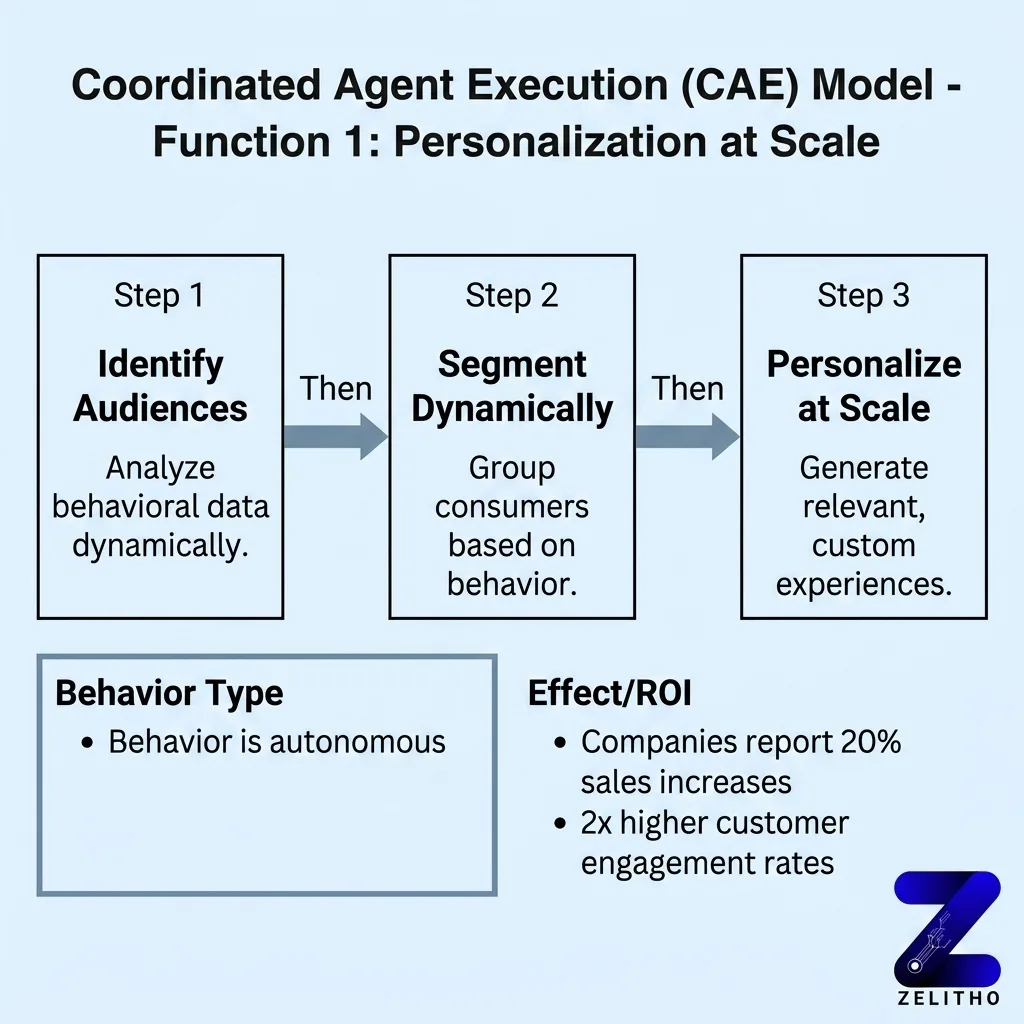
Modern marketing teams deploy AI agents across five operational domains:
Scanning search console data, competitor citation footprints, and prompt trends to identify high-converting topic gaps without manual spreadsheet analysis.
Synthesizing customer interviews, product documentation, and industry benchmarks into syntactically chunked articles tailored for dense vector retrieval.
Probing ChatGPT, Perplexity, Claude, and Gemini with hundreds of target buyer prompts to measure brand citation share and sentiment versus key competitors.
Connecting directly to CMS backends to update underperforming legacy posts with answer-first sections, comparative data grids, and structured schema.
Tracking web server access logs to confirm that AI scrapers (GPTBot, ClaudeBot, Bingbot) inspect newly updated URLs and ingest updated schema.
Identifying High-Intent Prompts and Tracking Real-Time AI Platform Traffic
An autonomous AI marketing agent identifies high-intent buyer prompts by analyzing multi-turn query patterns across conversational search engines. By monitoring the exact questions enterprise buyers ask when comparing solutions in ChatGPT and Copilot, marketing agents optimize content assets to address active purchase requirements in real time.
Agents classify conversational inputs into informational exploration, feature validation, or commercial procurement stages to guide strategic content publishing.
Agents monitor server logs for user-agents like GPTBot and PerplexityBot, ensuring high-value conversion pages are ingested within minutes of publication.
Traces multi-touch buyer journeys from initial AI engine discovery prompts through downstream product trial signups and demo bookings.
Frequently Asked Questions About AI Marketing Agents & Visibility Workflows
What is an AI marketing agent?
An AI marketing agent is an autonomous software system capable of evaluating performance signals, formulating execution plans, and completing complex marketing workflows (like content gap remediation and citation tracking) without requiring manual prompt-by-prompt supervision.
How do AI workflow services optimize search visibility?
AI workflow services optimize search visibility by systematically identifying high-demand conversational queries where a brand lacks citations, diagnosing token chunking and answer-first structure, generating grounded content patches, and deploying updates directly to the CMS.
How do AI workflows create trustworthy, AEO-ready articles?
They combine factual grounding to empirical data sources, explicit entity disambiguation through Wikidata schema, clean semantic HTML tables, and human-in-the-loop review to ensure that content satisfies both human editorial quality and machine retrieval standards.
What is the difference between an AI agent and traditional automation?
Traditional automation strictly follows rigid If/Then rules configured by humans and fails when inputs deviate. An AI agent is goal-oriented, analyzes unstructured context, adapts to unexpected obstacles, and uses multiple tools to achieve its target objective.
How do AI marketing agents identify high-intent prompts that influence revenue?
AI marketing agents identify high-intent prompts by clustering comparative product queries, pricing evaluations, and implementation questions asked across conversational interfaces, linking prompt themes directly to closed-won revenue data.
How do enterprise buyers discover brands using ChatGPT?
Enterprise buyers discover brands in ChatGPT by asking complex comparative questions such as vendor capability assessments, compliance verifications, and architectural trade-offs, where cited sources directly influence RFP consideration lists.
References and Citations
[1]https://www.mindstudio.ai/blog/ai-agents-for-marketing-teams/