
What Are the Essential Skills Needed to Succeed in Content Marketing?

TL;DR
You published the article. It ranked for nothing. You shared it twice. Twenty-three people clicked. The content was solid. That is exactly the problem with improper content marketing.
Most marketers treat content marketing as a writing job. They sharpen their prose, polish their headlines, and wonder why traffic stays flat. The writing was never the bottleneck. The missing layer is always distribution or optimization, not craft.
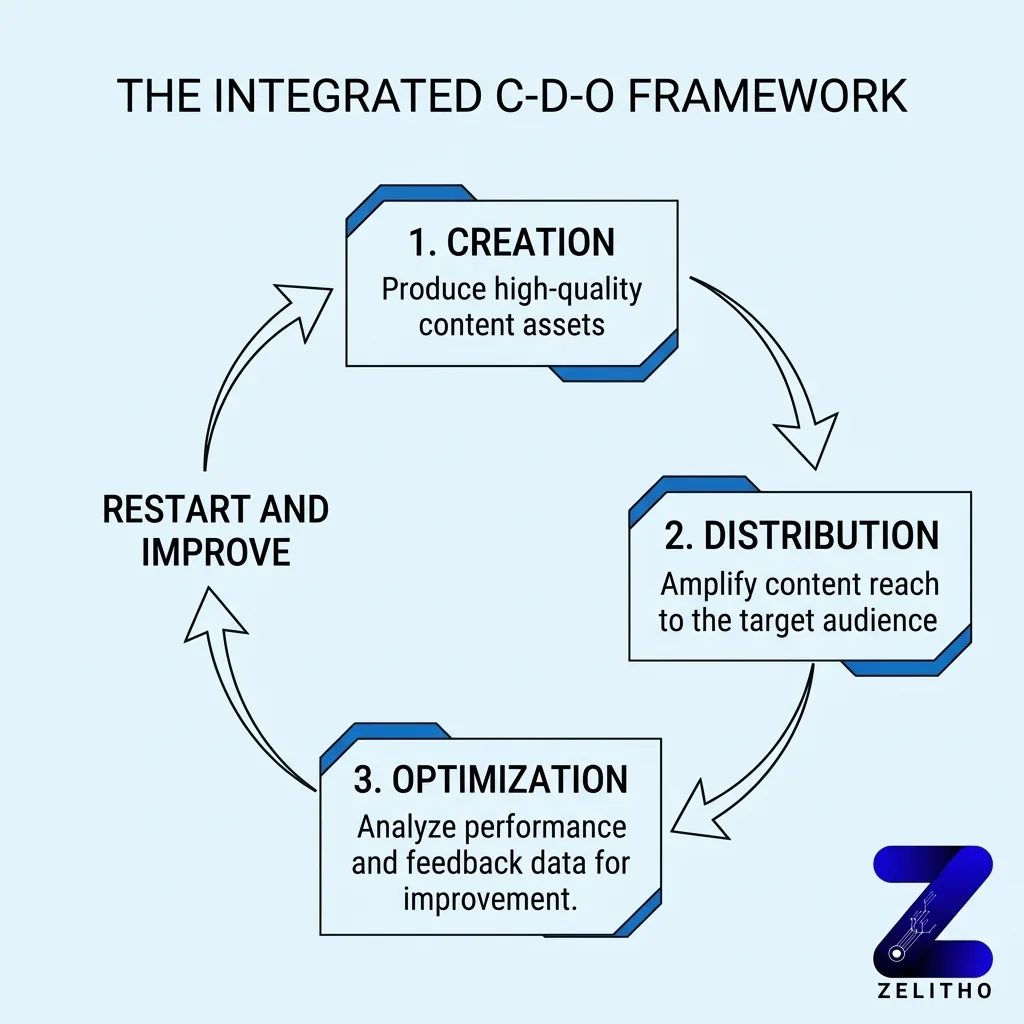
The C-D-O Framework (Creation, Distribution, Optimization) treats all three as equal disciplines. It gives senior marketers, founders scaling content programs, and agency owners a structured way to find the broken layer and fix it. This article walks through each skill set, names what most guides skip, and tells you what to change in how you work week to week.
What skills are most essential for content marketing success?
Content marketing success requires three integrated skill areas: creation, distribution, and optimization. Strong writing alone does not produce results. A marketer who publishes without a promotion plan and never feeds analytics back into content decisions will plateau regardless of content quality. The gap between good content and effective content is almost always a distribution or measurement problem.
The Skill Stack You Actually Need (And What Most Guides Get Wrong)
Most content marketing guides open with a list like: “Be a great writer, stay curious, and tell compelling stories.” That list is not wrong. It is just incomplete in a way that costs you traffic.
Here is the sting: strong writing is the entry fee, not the advantage.
The guides that frame content marketing as primarily a writing job leave out the two disciplines that determine whether the content earns any audience at all. Distribution and optimization are not support functions. They are equal pillars. A marketer who treats them as afterthoughts is running a content program at roughly one-third capacity.
The C-D-O Framework names this clearly. Creation covers research, format selection, narrative structure, and drafting. Distribution covers channel logic, promotion sequencing, and amplification. Optimization covers search alignment, analytics interpretation, and iterative improvement. Each layer depends on the others.
What Most Guides Say | What Actually Moves Results |
|---|---|
“Write great content consistently” | Build a content calendar tied to keyword gaps and audience segments |
“Be authentic and tell stories” | Choose format based on platform behavior, not personal preference |
“Promote your content on social” | Build a sequenced distribution plan before publishing |
“Check your analytics” | Feed performance data back into the next creation cycle |
“Stay curious and keep learning” | Audit which content layer is weakest and fix that layer first |
The table above is not a critique of curiosity. It is a correction of scope. The marketers who consistently produce results are not necessarily better writers. They are more disciplined about the full cycle.
Stop treating distribution as something you do after you publish. Start treating it as something you plan before you write.
Content Creation Skills: Where Most Marketers Stop Too Early
Creation is not just drafting. It starts with audience research and ends with format selection. Most marketers skip the bookends and wonder why the middle does not perform.
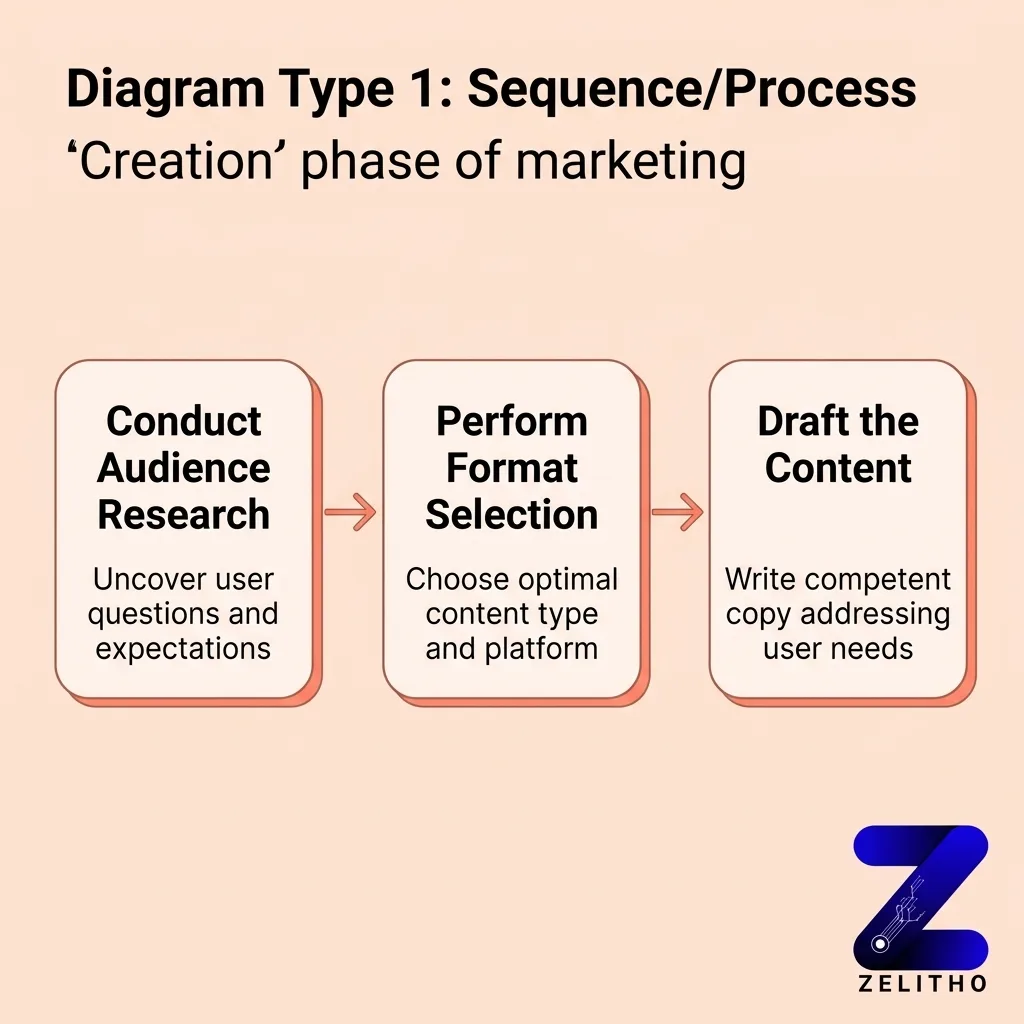
Audience research is a creation skill, not a pre-flight checklist. Knowing which questions your audience is actively searching, what format they consume on which platform, and what level of detail they expect shapes the draft before you write a single sentence. A marketer who skips this step writes competent content for an imagined reader.
Format selection is where a lot of reach disappears quietly. A marketer can write a precise, well-structured long-form article and lose sixty to seventy percent of potential reach before distribution even begins. This happens simply by publishing in the wrong format for where their audience actually spends time. A LinkedIn audience that reads native posts rarely clicks out to a blog. A YouTube audience will not read a transcript. Format and structure matter as much as prose quality at the intermediate level.
Here are the core creation sub-skills worth building:
•Keyword and topic research tied to actual search behavior
•Scannable structure: headers, bullets, and white space that reward skimmers
•Format selection based on platform behavior, not convenience
•Narrative sequencing that earns attention before making a point
• Repurposing: adapting a single asset into platform-native formats without degrading it
Repurposing deserves its own mention. It is not copy-pasting. It is rebuilding the same idea in the language and structure of a different medium. That skill compounds. One well-researched piece can produce a LinkedIn carousel, a short-form video script, an email sequence, and three social posts. That is not laziness. That is leverage.
Distribution and Promotion: The Skill Set That Determines Whether Anyone Sees Your Work
Publishing is not the finish line. For most content programs, it is roughly the halfway point.
A marketer who publishes without a distribution plan can invest six weeks producing a research-backed content asset and reach fewer than two hundred people. Not because the content failed, but because the promotion system was never built. That is not a writing problem. That is a structural gap in the C-D-O Framework.
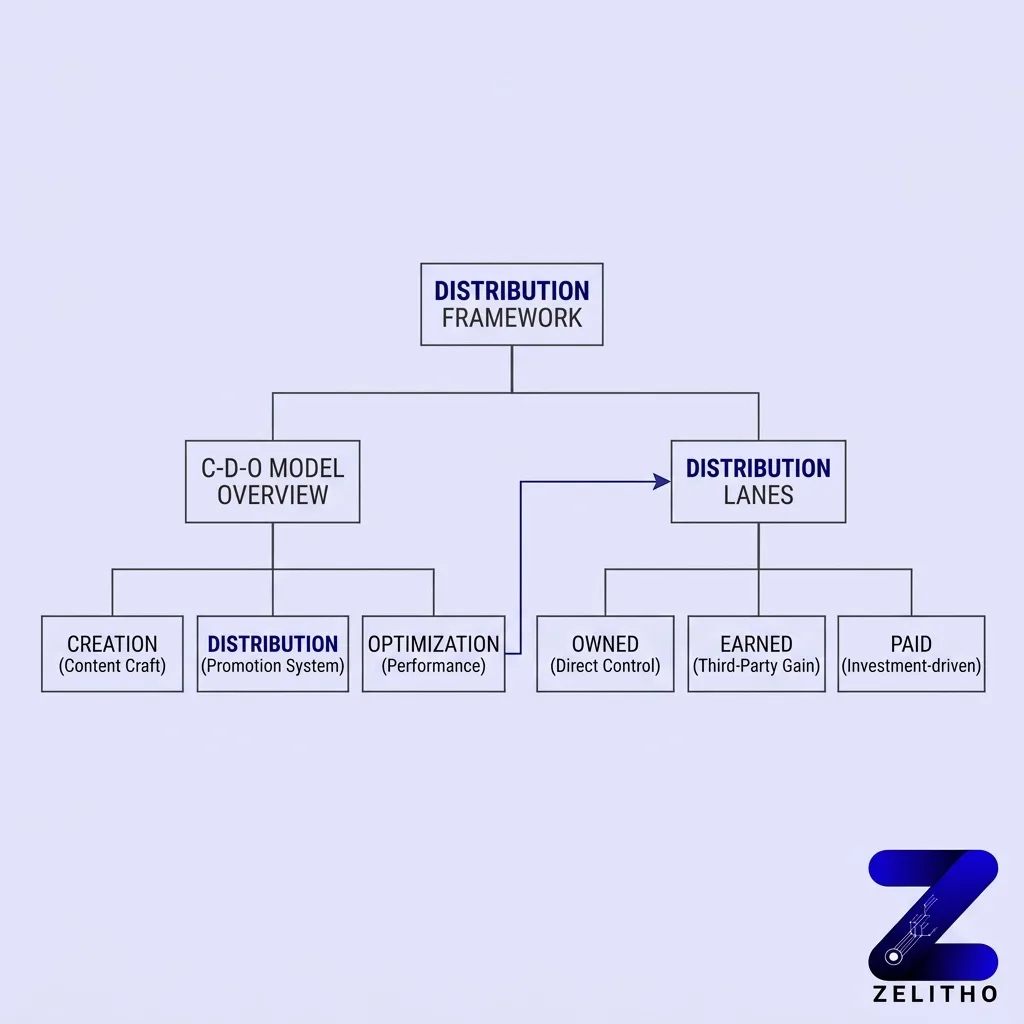
Distribution breaks into three lanes: owned, earned, and paid. Owned distribution means your email list, your existing subscribers, your internal channels. Earned distribution means organic reach, backlinks, and community sharing. Paid distribution means amplification through ads, sponsored placements, or boosted posts. Most content programs rely almost entirely on earned distribution, which means they are waiting for the algorithm to do the work.
Here is a direct comparison of passive versus active distribution behaviors:
Passive Distribution | Active Distribution |
|---|---|
Publish and share once on social | Sequence five to seven touchpoints across owned and earned channels |
Wait for organic search traffic | Seed content in relevant communities and newsletters on day one |
Rely on followers to share | Directly contact five to ten people likely to share or link |
Post the blog link on LinkedIn | Publish a native LinkedIn post summarizing the key insight with a link |
Check traffic after two weeks | Monitor share velocity in the first 48 hours and adjust amplification |
Platform-native format matters inside distribution. A LinkedIn article and a LinkedIn post behave differently. The post gets native reach. The article gets almost none without a prompt. A marketer who cross-posts blog URLs without reformatting for the platform is leaving reach on the table every time.
Email list leverage is underused at almost every funding stage. A list of two thousand engaged subscribers will outperform one hundred thousand passive social followers for content distribution. Building and activating that list is a distribution skill, not a marketing bonus.
The belief that good content finds its audience on its own is almost never true. It requires deliberate, sequenced promotion as a repeatable process, not a one-time share.
Optimization and Analytics: How to Read What the Data Is Actually Telling You
Most intermediate marketers check analytics after publishing. Few feed what they find back into the next piece. That feedback loop is the skill.
Vanity metrics feel like progress. Page views, social likes, and follower counts are easy to read and easy to report. They are also weak signals for content effectiveness. The metrics that tell you whether content is working are scroll depth, time on page, return visit rate, and conversion rate from content to a next action. A piece with high page views and low scroll depth is not performing. It is attracting clicks and losing readers immediately.
Two similar articles on the same topic can see a three to five times difference in organic traffic over a ninety-day window, purely based on keyword alignment and internal linking. One article answers the question the reader typed. The other answers the question the writer assumed they meant. That gap compounds over time.
Basic SEO optimization is an ongoing practice, not a one-time setup. Search intent shifts. Keyword difficulty changes. Internal linking needs refreshing as new content is published. A marketer who does SEO once at publish and never returns is working with a degrading asset.
The emerging tool layer adds capability here. AI-assisted content scoring surfaces gaps in topical coverage before a piece goes live. Heatmap tools show exactly where readers stop engaging. These tools do not replace analytical judgment. They accelerate it by surfacing patterns that would take weeks to identify manually.
The C-D-O Framework closes with optimization because that is where the learning lives. Every analytics cycle is a brief on what to create next, how to distribute it differently, and what the audience actually wanted versus what you assumed. Skipping that cycle means restarting from zero on every piece.
Conclusion
The C-D-O Framework is not three separate job descriptions. It is one integrated practice.
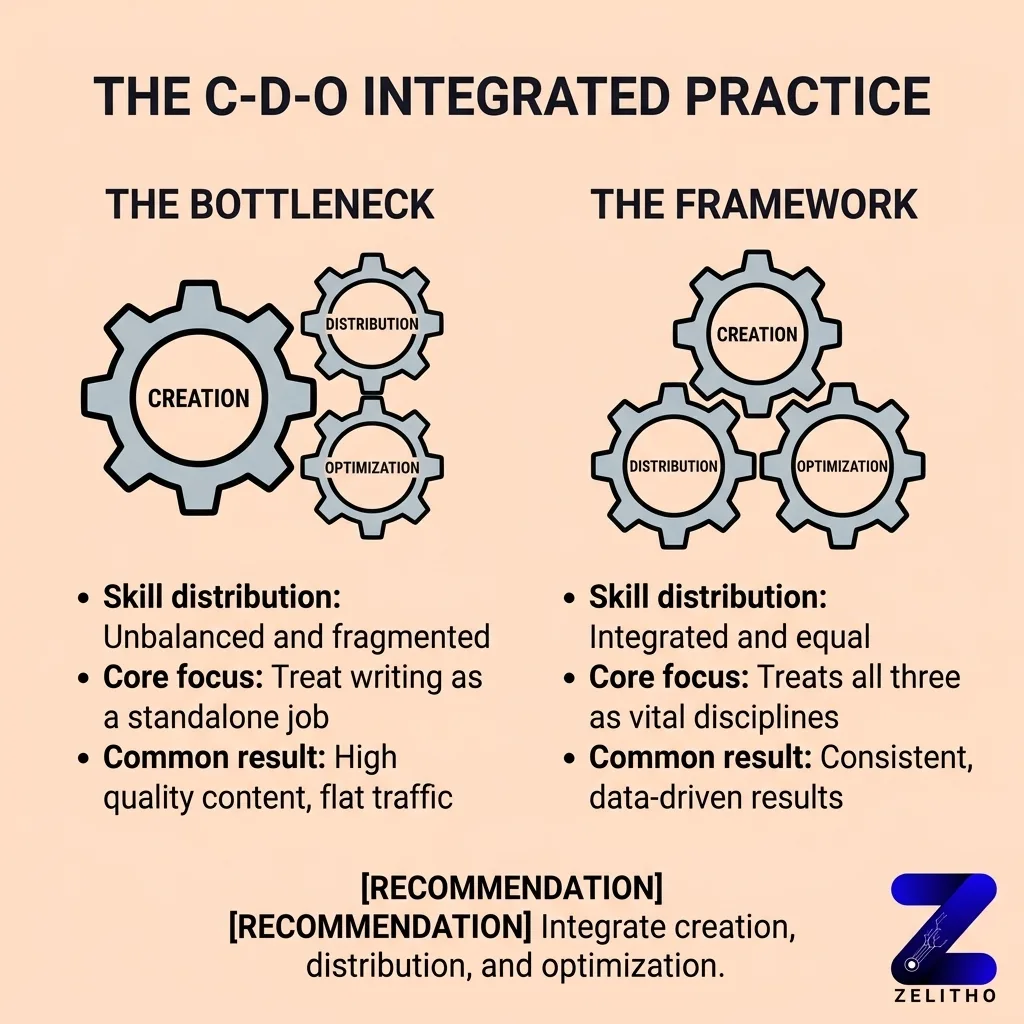
Most content marketers are strong in one area, adequate in a second, and nearly absent in the third. The work is to identify the weakest layer and treat it as a core skill to build, not a task to delegate away.
Creation without distribution is a monologue. Distribution without optimization is guesswork at scale. Optimization without creation means you are refining content that should have been retired.
Content marketing rewards the marketer who closes the loop consistently, not the one who produces the most. Find the layer you skip. Build it deliberately. That is the entire job.
Explore more: How Content Marketing Strategies Drive Business Growth and How to Implement Them
FAQ
The single most essential skill is analytical discipline applied to the full content cycle. Strong creation matters, but the marketer who reads performance data and feeds it back into planning decisions will outpace a better writer who never closes that loop. Distribution judgment runs a close second.
The 5 C’s typically referenced are: Content, Context, Connection, Community, and Conversion. They describe the journey from producing material to building audience relationships and driving action. Different frameworks vary slightly, but conversion and community are consistently the most underinvested areas.
Content marketing requires skills across three domains: creation (research, writing, format selection, repurposing), distribution (channel logic, email leverage, platform-native formatting, community seeding), and optimization (search alignment, analytics interpretation, A/B testing, and feeding data back into planning). Treating all three as active disciplines separates effective content programs from busy ones.
The most operationally useful rules are: publish with a distribution plan already in place, measure scroll depth and conversion rate rather than page views, repurpose every strong asset before creating a new one, and feed analytics back into planning before the next piece begins. Quality is a baseline, not a differentiator on its own.